
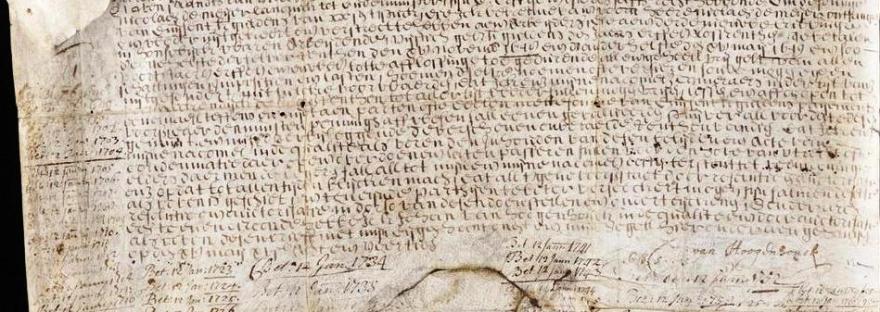
Imagine holding a financial instrument that’s older than the United States itself, a piece of history that not only tells the tale of centuries past but also continues to pay interest to this day. This is not a flight of fancy but a reality for Yale University, thanks to their acquisition of a remarkable bond issued by a Dutch water authority in 1648. This ancient bond, known as the Hoogheemraadschap Lekdijk Bovendams, is a fascinating artefact that links modern financial systems with their deep historical roots.
A Glimpse into History
In 1648, the Water Board of Lekdijk Bovendams issued a bond to fund the reconstruction of a crucial dyke along the Lek River near Honswijk. This wasn’t just any financial venture; it was a lifeline for a country where 55% of the land is vulnerable to flooding. The funds raised from this bond were pivotal for maintaining and fortifying the dykes, structures essential for the Netherlands’ survival.

The water board itself dates back to 1323, established by the bishop of Utrecht and later managed by the king. Over time, it evolved, merging with other water boards and eventually becoming part of the current water board de Stichtse Rijnlanden. This continuity of purpose and organization underscores the enduring importance of water management in Dutch society.
The Bond’s Journey
The bond, originally valued at 1,000 Carolus guilders (approximately $512 today), was issued to a Mr. Niclaes de Meijer at an interest rate of 5%. Over centuries, the bond’s interest rate was adjusted, reducing to 3.5% and later 2.5% in the 18th century. Today, it pays 11.34 euros ($12.80) annually, reflecting 25 guilders’ worth of interest. This goatskin document, one of the world’s oldest bonds still paying interest, has journeyed through time, crossing hands and continents.
Yale University’s Beinecke Rare Book & Manuscript Library purchased this bond in 2003 for 24,000 euros, recognizing its historical and financial significance. The bond, a bearer instrument, requires the physical document to be presented for interest payments, with dates meticulously recorded on the vellum. When space ran out in 1944, a paper allonge was added, continuing the tradition of recording payments.

Yale’s Recent Discovery
For over a decade, Yale did not collect interest on this bond. However, curiosity led them to check its status, revealing that the bond’s interest had indeed been accumulating. Now, Yale is set to receive 136.20 euros ($153) in back interest from the Dutch water authority de Stichtse Rijnlanden, proving the bond’s perpetual promise.
This bond is part of a small, elite group of centuries-old bonds still honored today. Notably, other bonds issued by Hoogheemraadschap Lekdijk Bovendams, some dating back to 1624, continue to yield interest. These bonds were critical for financing the maintenance and repair of dykes, showcasing the long-standing Dutch commitment to water management.
The Legacy of Perpetual Bonds
The concept of perpetual bonds isn’t unique to the Netherlands. Historical precedents include rents from the 12th century in Italy, France, and Spain, designed to navigate the usury laws of the Catholic Church. Unlike typical loans, these did not require principal repayment, thus evading the label of usury.
Throughout history, issuing long-term debt has been a strategy for various institutions. However, maintaining an unbroken chain of interest payments over centuries, as seen with the Dutch water bonds, is exceptionally rare. These instruments serve as a testament to the enduring nature of financial commitments and the historical continuity of financial systems.
Final Thoughts
The Dutch Water Authority Bond from 1648 is more than a financial relic; it is a living piece of history. It embodies the innovative spirit of Dutch water management, the foresight of perpetual financial instruments, and the unbroken chain of responsibility spanning generations. Yale’s rediscovery and collection of this bond’s interest highlight not only a fascinating historical narrative but also the remarkable resilience of financial promises. This bond is a reminder that history is not just recorded in books but also in enduring commitments that bridge the past with the present.
 Indrajit Roy Choudhury
wow…this is amazing!
Amazing!
Amazing!
OMG…. Amazing