Banwarilal's samosa business serves as a parable for economic downturns, highlighting the impact of greed and poor decision-making. His son's fear-driven cost-cutting measures nearly led to the business's collapse during a recession. Returning to ethical practices, Banwarilal revived his business, illustrating the importance of quality and ethics for sustainable success. This story emphasizes the need for responsible and far-sighted economic practices to prevent future crises.
Blog
The Looming Specter of Recession: A Global Concern with an Indian Twist
Since the COVID-19 pandemic, the threat of global recession has grown due to central banks' efforts to control inflation. While advanced economies may face recession, India could see relief from falling global commodity prices. However, India's export and investment outlook may be affected by a potential US recession. Despite global uncertainties, India's recession probability remains low, with the economy showing signs of robust recovery. The impact of a US recession on India will depend on its severity, but India's resilient economy and strong domestic policies offer a relatively stable outlook.
The Indian Rupee’s Struggle: A Detailed Analysis
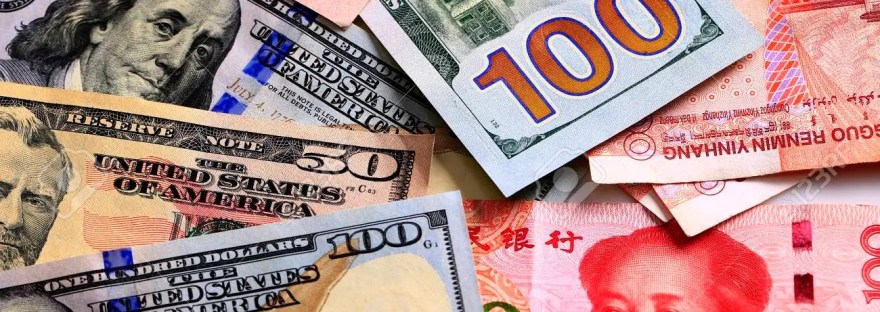
The Indian rupee has plunged more than 6 per cent against the US dollar this year and tumbled to record lows against the American currency in recent weeks, weighed down by broad strength in the greenback and as investors retreated from domestic share markets. This is in spite of the Indian central bank’s conviction and actions to stall a freefall. The Reserve Bank of India (RBI) has attempted to save the vulnerable rupee. The analysts say the dollar is likely going to remain strong for the next three months, possibly to the end of the year. The Fed wants to maintain a strong dollar so that the dollar can remain the world's major reserve currency.
The Emerging Challenge to Dollar Dominance: China’s Renminbi
Economic sanctions on Russia have highlighted the US dollar's power and the risks of heavy reliance on it, fueling discussions about China's Renminbi (RMB) as a global reserve currency if Beijing loosens its grip on the economy. Over 70 central banks hold RMB, and its popularity for international transactions is growing. China must open its markets, ensure currency stability, refrain from manipulation, and develop a mature financial system to boost RMB's global role.
Embracing Digital Disruption: A Wake-Up Call for Traditional Banks
Digital attacker banks have demonstrated that they can delight customers, scale up quickly and expand into new products, geographies and customer segments. Digital attackers are lower cost, faster to innovate and can transform their traditional parents. As an alternative to embarking on a multiyear, hugely expensive systems transformation, some incumbent banks have launched attackers with the aim of transforming the core business.
The Rise of the Digital Economy: Transforming Traditional Banking Through Platformification
The banking industry is undergoing a digital transformation, with fintech startups challenging traditional banks. Trust in banking lies in reliability and regard, an area where traditional banks excel. To stay relevant, banks must shift from a pipeline to a platform model, fostering collaboration and innovation, and embracing open banking for a successful future.
COVID-19: A Case of Knightian Uncertainty
Frank Knight, an economist, formalised a distinction between risk and uncertainty in his 1921 book, Risk, Uncertainty, and Profit. In his classic book, Knight introduced a distinction between measurable uncertainty, which he called “risk,” and “true uncertainty,” which cannot “by any method be reduced to an objective, quantitatively determined probability.”
Global Finance vs. COVID-19: Strategies for Economic Stability
G7 finance ministers and central bank governors pledge to use policy tools against coronavirus threat, but effectiveness remains uncertain. Rate cuts have been swift but may be limited. Global economy faces potential impacts, including market downturn and decreased trade. COVID-19 presents major challenges, affecting economic and trade activities globally and in Iraq. Iraq faces dual crises with plummeting oil prices and trade disruptions amidst coronavirus outbreak. Fiscal deficits and vulnerabilities loom, but hope for containment and recovery persists.
Mobile Banking in Iraq: The Transformative Impact of Technology on Banking
The banking industry has been revolutionized by rapid technological advancements over the past decade. Mobile banking has emerged as a key player, significantly improving customer access to financial services globally, particularly in developing nations. Iraq's banking sector has undergone a remarkable transformation, with the Central Bank's push for mobile banking and the introduction of mobile banking apps by individual banks. This evolution highlights the profound impact of technology on economic development and financial inclusion.
Embracing the Digital Revolution: The Rise of Digital Payments in India
Payments are made using payment instruments. Cash, for example, is a payment instrument. So too are cheques. Digital payment is a way of payment which is made through digital modes. In digital payments, payer and payee both use digital modes to send and receive money. Innovation has been one of the biggest drivers for the growth of India’s digital payments economy. Along with the increasing adoption of smartphones, the availability of affordable mobile internet is doing wonders for the digital payments market in India.