

In the realm of commerce, payments are the lifeblood that keeps transactions flowing smoothly. Traditionally, cash and checks have been the go-to methods for settling debts. However, in today’s rapidly evolving landscape, digital payments have emerged as a game-changer, revolutionizing the way we exchange money.
Digital payments, facilitated through electronic means, have become increasingly prevalent in our daily lives. Gone are the days when carrying physical currency was the norm. Now, with just a few taps on a smartphone, individuals can seamlessly transfer money to merchants or friends. This shift towards digital transactions is reshaping the economic landscape of countries like India.
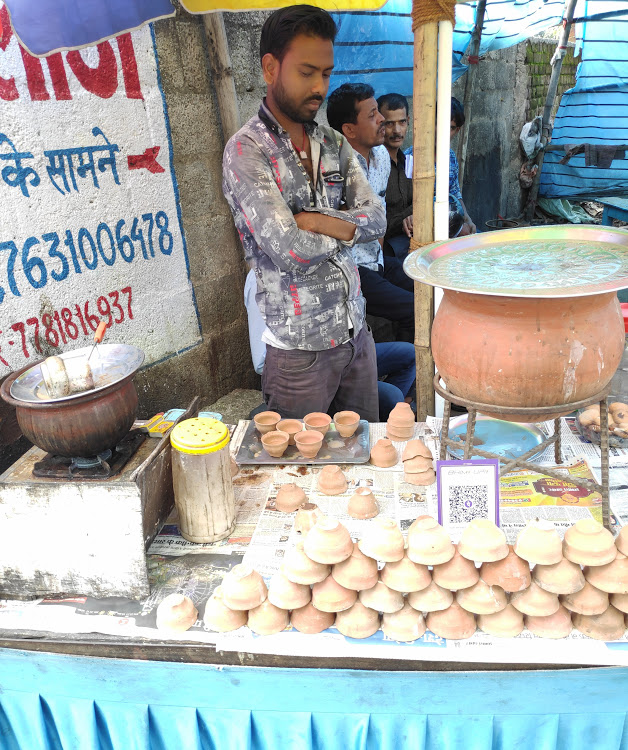
Recently, during a routine visit to pick up my son from his hospital duty, I was pleasantly surprised to find that the tea-seller adjacent to the hospital gate was accepting digital payments. Similarly, while strolling down Main Road, Ranchi, I encountered a panipuri vendor who readily accepted payment via UPI through Google Pay. These encounters underscore the widespread acceptance and adoption of digital payment methods among roadside vendors and hawkers in India. My son and I had some panipuris and paid him ₹20 ($0.28) through UPI via Google Pay and he gladly accepted the payment.
I am impressed by the spread and penetration of digitalised payments in India. Roadside vendors and hawkers in cities like Ranchi are accepting digital payments reflect wide acceptance and usage of digital payments in India.
India is experiencing a digital renaissance, with digitized services and payments leading the charge. Unlike some other countries, where mobile payments are dominated by banks, India’s digital payment ecosystem is built on public infrastructure, such as the Unified Payment Interface (UPI) and Aadhaar-linked electronic payments. This open architecture fosters interoperability and allows for the evolution of a robust payment system.
The journey towards a cashless economy in India gained significant momentum with the government’s Cashless India initiative, launched as part of the broader Digital India campaign. Factors such as convenience, smartphone penetration, the rise of non-banking payment institutions, progressive regulatory policies, and growing consumer readiness have fueled the growth of the digital payment sector.
The growth of the digital payment sector is driven by multiple factors including convenience to pay, the ever-growing smartphone penetration, the rise of non-banking payment institutions (payments bank, digital wallets, etc.), progressive regulatory policies and increasing consumer readiness to the digital payment platform.

As per the India Brand Equity Foundation blog post, when it comes to the ecosystem of digital payments, India is pegged to have the most evolved system compared to 25 other countries which were surveyed by FIS, a US-based banking technology company, headquartered in Jacksonville, Florida. This included the UK, China, and Japan. The parameters that FIS used to measure the digital payments in these 25 countries include round-the-clock availability of the services, adoption, and immediacy of payments.
FIS’ Flavors of Fast used the Faster Payments Innovation Index (FPII) rates different payment systems across these 25 countries on a scale of 1-5, with 5 being the highest rating. According to FPII, India’s IMPS service was the only system to get a level 5+ rating, leaving behind countries like UK, Singapore, Denmark, Switzerland, China, Japan, and others. This certainly puts India’s digital payments story to be an exciting one.
As per the Financial Inclusion Lab of FIS, India is one of the countries with the most advanced and innovative payment instruments; it even ranks No. 1 on FIS’ payment index. With WhatsApp, the most widely used messenger app in the country with almost 200 million users, rolling out its payments feature (currently available only in the India market), a peer-to-peer system based on UPI – India seems all set for a digital payments revolution.
Furthermore, the introduction of innovative technologies and the convergence of various platforms have accelerated the growth of India’s digital payments market. With WhatsApp rolling out its payment feature, leveraging UPI for peer-to-peer transactions, India is poised for a digital payments’ revolution.
Digital Payment market is booming thanks to the introduction of new technologies that continuously converge with others and encourage the emergence of innovative payment methods and consequently creating business opportunities. The digital payments market is expected to grow at an average annual growth rate of 18 percent between 2018–23, with a turnover expected to reach $87 billion by 2023, according to a ReportLinker report.
Innovation remains a driving force behind India’s digital payments economy. The proliferation of smartphones and affordable mobile internet has democratized access to digital payment platforms, empowering millions of users to embrace cashless transactions.
As India marches towards a digital future, the rise of digital payments stands as a testament to the nation’s technological prowess and its ability to adapt to the changing needs of the modern world. With each transaction conducted digitally, India takes a step closer to realizing its vision of a truly cashless society.
 Indrajit Roy Choudhury
Impressive indeed.
True. And the beauty of this Digital Revolution is that smaller cities/ towns have embraced it open arms and pushing it further.
The Delhi Golgappa walas are yet to even accept any form of digital payments, they still prefer Hard Cash!!!
In Hyderabad, the electrician accepted PayTM so did the plumber!!! 😃😃
Yes, cities like Ranchi are much smarter and more digital friendly than the metros. 😀
Interesting!
World is moving forward towards cashless so should everyone with it or else will be left behind. I m lovin it!!!!
Yes 👍👍
There’s a long way to go when it comes to digital payments. There are still many issues. Even now, cash and a credit card are more reliable. It will take some more time for them to evolve
Yes sure. The impressive thing is its growing acceptance.
true
It is very good to know the road side vendors are accepting the digital payments. I did not aware about this before. In West Bengal,. It is difficult!
So these Ranchi vendors can be poster boys of digital payments. 🤪
A new kranti digital kranti 😀😀😀
Yes, well said Nitin.
Agree. Even issues of security on digital payments are much more comprehensively addressed in India than in many other places, eg. India might have been among the earliest to require a second level authorisation on Card payments, instead of just swiping and paying.
Yes sir, while advanced economies like Canada is far behind and the US is yet to be on fully chip and dip system of cards.
True!
indeed this system has made our lives fast and cashless
That way digital payments not accepted by Calcutta like other metros. In Bangalore i used to pay vegetable sellers by paytm.
Some cities, especially Kolkata lag behind in adopting the digitalisation.
Enjoyed reading the article. In a simple language very nicely explained about the digital payment.
Thank you!