

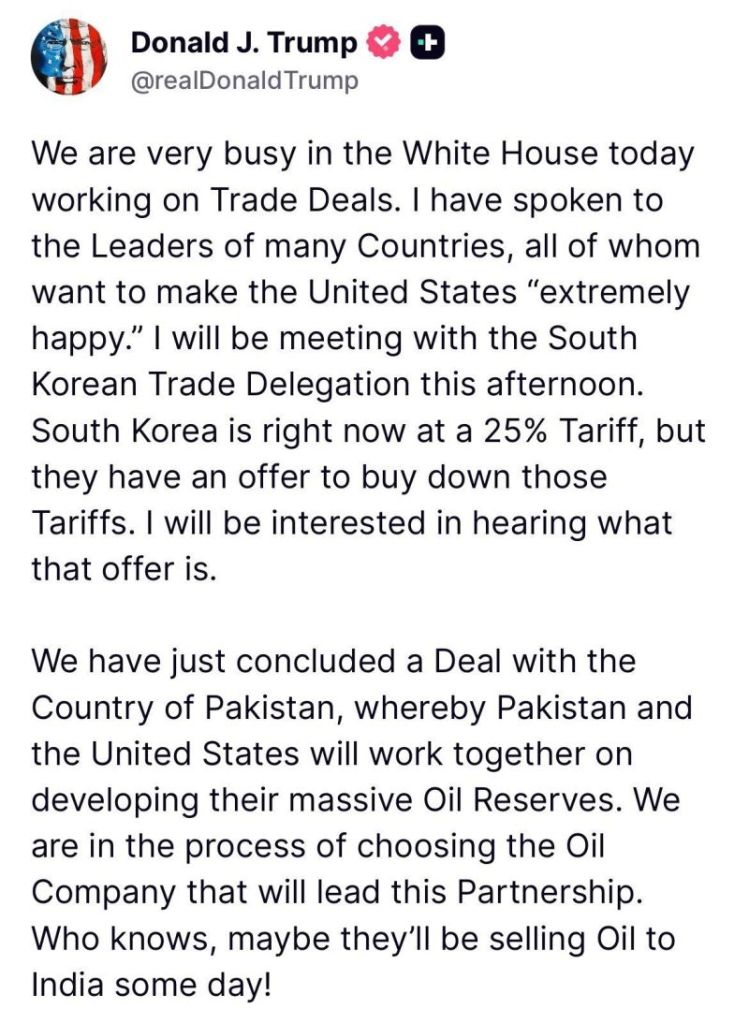
The global chessboard is in constant flux, and recent geopolitical moves, particularly those whispered about in the hallowed halls of diplomacy, suggest a fascinating, if sometimes opaque, realignment. One narrative gaining traction posits a strengthened US-Pakistan alignment, ostensibly centred around oil – a “supply chain realignment” in the making. But as with all things in international relations, the surface rarely tells the whole story.
The Nuance of “Oil-Centric” Alliances
It’s tempting to view any US-Pakistan partnership purely through the lens of energy security. A primary assumption is that an “oil-centric partnership” could be a strategic play to ensure stability and keep critical commodities out of the hands of what some might label “terroristic nation-states.” However, given Pakistan’s limited indigenous oil reserves, any such partnership from the US side would be less about direct oil supply and more about strategic influence and regional stability, perhaps as a counter-terrorism measure or a check on other regional powers.
But here’s where China’s undeniable influence in Pakistan comes into sharp focus. Through the China-Pakistan Economic Corridor (CPEC), a flagship project of Beijing’s Belt and Road Initiative (BRI), China has poured billions into Pakistan’s infrastructure, energy, and port development, most notably the Gwadar Port. This isn’t just an economic venture; it’s a strategic artery providing China with a potential alternative trade route to the Strait of Malacca, directly connecting its western regions to the Arabian Sea.
Therefore, any US-Pakistan dialogue, even one seemingly focused on oil, cannot ignore the deep economic and strategic ties that bind Pakistan to China. While the US might seek a stable Pakistan to secure regional interests, China’s investments represent a long-term play for economic connectivity and geopolitical leverage in South Asia and the wider Indian Ocean region. The “performative” aspect of diplomacy you highlight is crucial here: public statements might mask a complex dance between competing influences.
India: The “Undead” Economic Powerhouse
In stark contrast to the intricate dance of traditional alliances and the rising influence of China stands India. Its economy, to borrow a vivid phrase, is “killing” the might of many, exhibiting an “Undead” economic status and a decidedly “north-easterly trajectory.” This isn’t just about growth; it’s about a fundamental reorientation of trade that increasingly refuses to adhere to the norm-governed era of neocolonialists.
India’s rise is characterized by a confident and assertive approach to global trade and diplomacy, actively diversifying its partnerships to reduce over-reliance on any single power. This approach, which prioritises its own economic and strategic interests, is a direct challenge to any attempts at regional hegemony, be it from traditional powers or emerging ones. India’s burgeoning economy and its strategic location make it a critical player in the evolving dynamics of the Indo-Pacific, often finding itself in a delicate balance with both the US and China.
The economic competition between India and China is also a significant factor. While India has a substantial trade deficit with China, it is actively seeking to build domestic capacity, diversify supply chains, and attract investment from other partners, embracing a “China Plus One” strategy. This nuanced approach demonstrates India’s pragmatism: engaging economically where it makes sense, but building resilience against potential vulnerabilities.
A Shifting Landscape
What we are witnessing is a complex interplay of traditional power dynamics, evolving energy security concerns, and the ascendance of new economic giants, with China as an undeniable force. The whispers in diplomatic corridors, the performative aspects of international relations, the immense economic and strategic weight of CPEC, and the undeniable force of India’s economic growth all contribute to a fascinating and often unpredictable global landscape.
The key takeaway? Don’t always take geopolitical commentary at face value. The real story often lies in the unspoken objectives, the strategic manoeuvres of multiple powerful actors, and the undeniable rise of nations charting their own course in an increasingly multipolar world. The US, Pakistan, India, and China are all intertwined in a complex geopolitical game, where every move has ripple effects across the entire board.
 Indrajit Roy Choudhury
The classic geopolitical love triangle: US wants stability, China wants a corridor, Pakistan wants both, and India just wants to keep compounding
“US: ‘Can we talk oil?’
Pakistan: ‘Only if China’s not listening.’
India: Logs into Bloomberg smiling.”
Aptly put! Each player plays a different game—India’s long game of growth might just outlast the others’ tactical plays.